

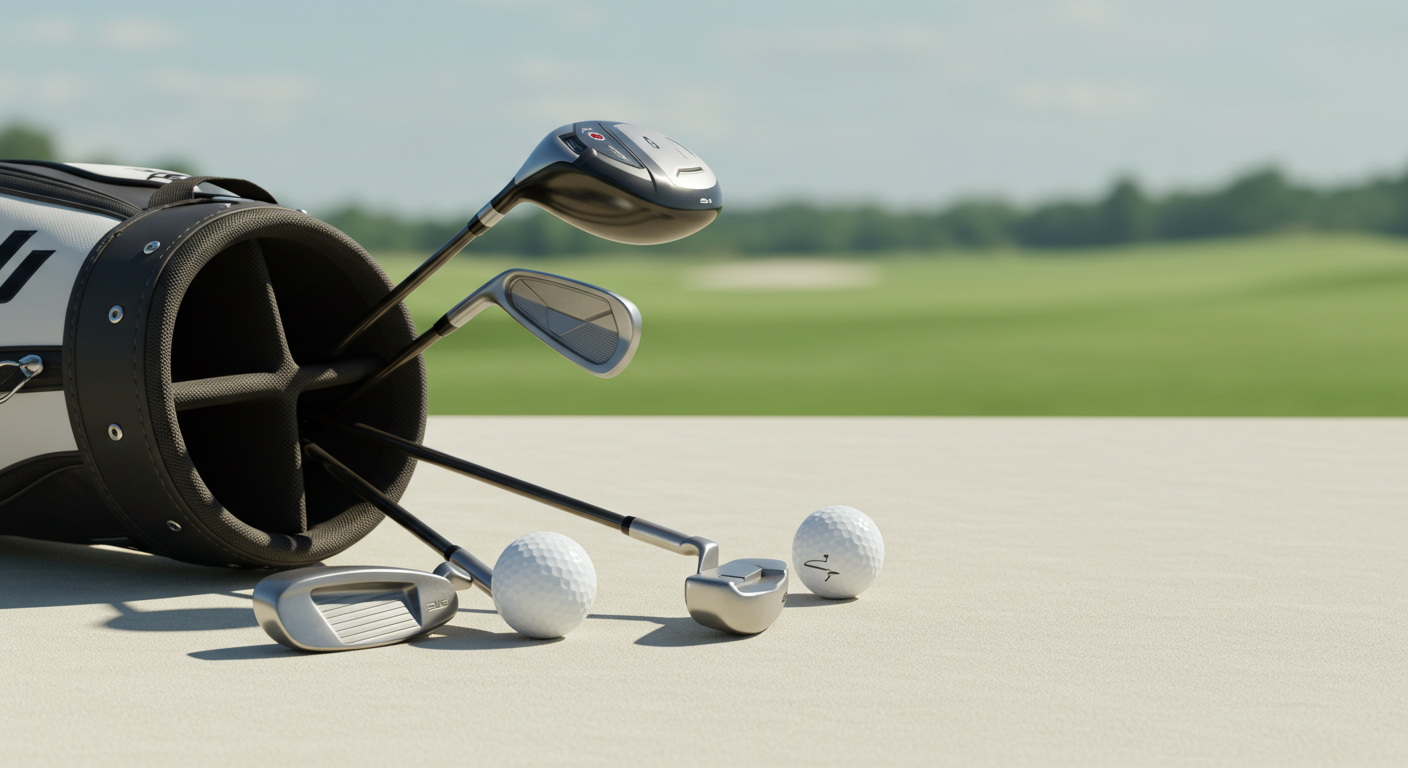
Understanding Your Needs: What Golf Clubs Do Beginners Really Need?
Many new golfers assume they need a full set of 14 clubs from the outset. However, this is rarely the case. For those just starting, focusing on a more manageable selection of clubs can simplify the learning process and reduce initial investment. The goal is to acquire clubs that are forgiving, easy to hit, and cover the essential distances you’ll encounter on the course. Understanding what golf clubs do beginners need involves prioritizing playability over completeness.
The Core Components: Driver, Woods, Hybrids, Irons, Wedges, Putter
A standard golf bag can hold up to 14 clubs, each designed for a specific purpose. For new players, understanding the function of each type is key:
- Driver: This is the largest club, designed for maximum distance off the tee. Beginners often benefit from drivers with larger clubheads (460cc, the maximum allowed) and a higher loft (10.5 to 12 degrees) to promote a higher launch and greater forgiveness on mishits.
- Fairway Woods (3-wood, 5-wood): Used for long shots from the tee or fairway. A 3-wood or 5-wood is typically sufficient for beginners, offering a good balance of distance and control.
- Hybrids: These clubs blend the characteristics of irons and woods, featuring a compact head like a wood but with the length and loft of an iron. Hybrid clubs for beginners are particularly beneficial as they are significantly easier to hit consistently than long irons (3, 4, 5 irons), providing better launch and distance from various lies. Many beginner sets replace long irons with hybrids.
- Irons (6-iron through 9-iron): Used for approach shots to the green. Beginners should look for cavity-back irons with perimeter weighting, which offer a larger sweet spot and more forgiveness on off-center strikes.
- Wedges (Pitching Wedge, Sand Wedge): Essential for shorter shots around the green and out of bunkers. A pitching wedge (PW) and a sand wedge (SW) are usually sufficient for new golfers.
- Putter: Used for rolling the ball into the hole on the green. Putter selection is highly personal, but beginners can start with a mallet-style putter for added stability and alignment assistance.
Why Less Can Be More: Starting with a Half Set
For many new golfers, starting with a full 14-club set can be overwhelming and unnecessary. A half set, or a carefully curated selection of 7-9 clubs, offers several advantages. It simplifies decision-making on the course, allowing you to focus on swing mechanics and course management rather than club selection. Furthermore, it significantly reduces the initial financial outlay. A typical half set might include a driver, a hybrid, a 6-iron, an 8-iron, a pitching wedge, a sand wedge, and a putter. This selection provides enough versatility to play a full round while keeping things manageable. Many manufacturers offer excellent beginner golf club sets that are scaled down in this manner.
The Importance of Forgiveness in Beginner Clubs
When discussing golf clubs, ‘forgiveness’ refers to a club’s ability to minimize the negative effects of off-center hits. For beginners and golf clubs for high handicappers, forgiveness is paramount. Clubs designed for forgiveness typically feature:
- Larger Clubheads: Provides a bigger hitting area, increasing the chance of making solid contact.
- Perimeter Weighting: Weight distributed around the edges of the clubhead, which stabilizes the clubface at impact and reduces twisting on mishits.
- Lower Center of Gravity (CG): Helps launch the ball higher with less spin, making it easier to get the ball airborne and achieve greater distance.
- Offset Design: Often found in irons, this design positions the clubface slightly behind the hosel, giving the golfer a fraction more time to square the clubface at impact, reducing slices.
These features collectively help new players achieve more consistent results, even when their swing isn’t perfect, leading to a more enjoyable and less frustrating experience.
Key Factors When Choosing Golf Clubs for Beginners
Selecting the right equipment involves more than just picking up a set. Understanding specific design elements and personal fit considerations is crucial for how to choose golf clubs for beginners effectively.
Club Type and Design: Prioritizing Playability
The design of a golf club directly impacts its playability, especially for those still developing their swing. For irons, cavity-back irons are almost universally recommended for beginners. Unlike blade irons, which have a solid back and are designed for highly skilled players, cavity-backs have weight distributed to the perimeter, creating a larger sweet spot and more forgiveness. Additionally, irons with wide soles help prevent the club from digging into the turf, making it easier to hit solid shots from various lies. As mentioned, replacing long irons (3, 4, 5) with hybrid clubs for beginners is a smart move. Hybrids offer a lower center of gravity and a wider sole, making them much easier to launch and control than their iron counterparts, especially from the fairway or light rough.
Shaft Flex and Material: Matching Your Swing Speed
The shaft is the engine of the golf club, and its characteristics significantly affect performance. Shaft flex refers to how much the shaft bends during the swing. Matching the flex to your swing speed is vital for optimal distance and accuracy. For most golf clubs for new golfers, a more flexible shaft is appropriate:
- Ladies (L) Flex: For slower swing speeds, typically under 60 mph.
- Senior (A/M) Flex: For moderate swing speeds, often 60-75 mph.
- Regular (R) Flex: The most common flex, suitable for average swing speeds (75-90 mph).
- Stiff (S) Flex: For faster swing speeds (90-105 mph).
- Extra Stiff (X) Flex: For very fast swing speeds (over 105 mph).
As a beginner, it’s generally better to err on the side of a more flexible shaft (e.g., Regular or Senior) as it can help generate more clubhead speed and provide a better feel for the club. Regarding material, graphite shafts are lighter and more flexible than steel shafts. This makes them ideal for beginners, as the lighter weight can help increase swing speed and reduce fatigue. Steel shafts, while more durable and offering more feedback, are generally preferred by more experienced players with higher swing speeds.
Club Length and Lie Angle: Basic Fit Considerations
While a full custom fitting might be premature for a complete novice, understanding basic fit considerations for how to choose golf clubs for beginners is still valuable. Club length primarily relates to your height. Standard club lengths are designed for individuals of average height (around 5’7″ to 6’1″ for men, 5’3″ to 5’8″ for women). If you fall significantly outside these ranges, you might benefit from clubs that are slightly shorter or longer. Lie angle refers to the angle between the sole of the club and the shaft at address. An incorrect lie angle can cause the clubface to point left or right at impact, leading to directional errors. For beginners, standard lie angles are usually sufficient, but if you find yourself consistently hitting shots off-line despite a seemingly good swing, it might be worth investigating. Many beginner sets come with standard lengths and lie angles that suit a broad range of players.
Budget Considerations: Affordable Golf Clubs for Beginners
Golf can be an expensive sport, but it doesn’t have to be. There are many options for finding affordable golf clubs for beginners. Complete beginner sets from reputable brands offer excellent value, providing a cohesive set of forgiving clubs, often including a bag, for a fraction of the cost of individual clubs. Another strategy is to consider buying used clubs. Websites, pro shops, and specialized golf retailers often have a good selection of pre-owned clubs that are still in excellent condition. Look for clubs that are a few years old but still incorporate beginner-friendly technology. Entry-level brands also offer quality clubs at competitive price points. Remember, the goal is to get started with functional, forgiving equipment, not necessarily the latest or most expensive gear.
Top Picks: Recommended Golf Club Sets for New Golfers
When looking for the best golf club brands for beginners, focus on those that prioritize forgiveness, ease of use, and value. Many brands specialize in creating comprehensive beginner golf club sets designed to help new players succeed.
Comprehensive Beginner Golf Club Sets
A comprehensive beginner golf club set typically includes a driver, a fairway wood (often a 3-wood or 5-wood), one or two hybrids, a selection of irons (e.g., 6-PW), a sand wedge, and a putter. These sets are designed to provide all the necessary clubs to play a full round, often packaged with a lightweight stand bag and matching headcovers. The clubs within these sets are engineered with features like oversized heads, perimeter weighting, and graphite shafts to maximize forgiveness and make them easier to hit. They offer a cohesive feel and performance across the set, which is a significant advantage for new players.
Excellent Choices for Men’s Beginner Golf Club Sets
Men’s beginner golf club set options typically feature standard lengths and regular or senior flex graphite shafts. The drivers often have a loft of 10.5 to 12 degrees, promoting a higher launch. Irons will almost certainly be cavity-back designs with wide soles. These sets are engineered to provide a balance of distance and control, helping male beginners get the ball airborne and achieve consistent contact. Look for brands known for their game-improvement technology, as these features translate directly into easier playability for new golfers.
Ideal Options for Women’s Beginner Golf Club Sets
Women’s beginner golf club set options are specifically tailored to the physical characteristics and swing dynamics of female golfers. These sets typically feature shorter club lengths, lighter overall club weights, and more flexible (Ladies flex) graphite shafts. The grips are often smaller to accommodate smaller hand sizes. Drivers in women’s sets usually have higher lofts (12-14 degrees) to aid in launch, and irons are designed with maximum forgiveness. These modifications help women generate more clubhead speed, achieve higher ball flight, and make consistent contact, leading to a more enjoyable experience.
Golf Clubs for High Handicappers: Maximizing Consistency
Beyond just beginners, golf clubs for high handicappers share many of the same design philosophies. The primary goal is to maximize consistency and forgiveness. This means prioritizing clubs with:
- Oversized Heads: Especially in drivers and fairway woods, to increase the sweet spot.
- Offset Designs: In irons, to help square the clubface and reduce slices.
- Wide Soles and Low Center of Gravity: In irons and hybrids, to improve turf interaction and make it easier to get the ball airborne.
- Strong Lofts: Sometimes seen in game-improvement irons to increase distance, though this can sometimes come at the expense of trajectory.
These features are all about making the game easier and more enjoyable by reducing the penalty for less-than-perfect swings.
Buying Guide: Making Your Final Decision
Once you understand the types of clubs and key features, the next step is making a purchase. This section offers practical advice on how to choose golf clubs for beginners when it comes to buying.
New vs. Used: Weighing Your Options
When considering affordable golf clubs for beginners, the choice between new and used equipment is significant.
- New Complete Sets: These offer convenience, a cohesive look and feel, and the latest beginner-friendly technology. They often come with warranties and are a straightforward option for those who want to get started without extensive research. The downside is the higher upfront cost compared to used clubs.
- Used Clubs: Buying individual used clubs or a used set can be very cost-effective. You can often find higher-end clubs from previous seasons at a fraction of their original price. The challenge lies in ensuring the clubs are in good condition and that you’re assembling a balanced set. Inspect shafts for dents or cracks, grips for wear, and clubfaces for excessive damage.
For most beginners, a new complete set offers the best balance of value, convenience, and performance. However, if budget is a primary concern, a carefully selected used set can be an excellent alternative.
The Value of a Complete Beginner Set
For new players, investing in one of the many available beginner golf club sets is often the most sensible approach. These sets are specifically engineered to work together, providing a consistent feel and performance across all clubs. They eliminate the guesswork of piecing together individual clubs and ensure you have a functional set that covers all essential shots. Furthermore, they typically represent a significant cost saving compared to buying each club separately. Many come with a lightweight stand bag, making it easy to transport your clubs to the range or course.
When to Consider a Professional Fitting
While a professional club fitting is invaluable for experienced golfers, it’s generally not necessary for absolute beginners. Your swing mechanics are still developing, and a fitting based on an inconsistent swing might lead to clubs that are quickly outgrown. For golf clubs for new golfers, standard off-the-rack sets are usually sufficient. A good rule of thumb is to play for at least six months to a year, taking lessons and developing a more consistent swing, before considering a full professional fitting. At that point, a fitting can fine-tune your equipment to your evolving game, optimizing shaft flex, length, lie angle, and grip size for maximum performance.
Frequently Asked Questions About Beginner Golf Clubs
New golfers often have similar questions about their equipment. Here are answers to some common queries regarding what golf clubs do beginners need and related topics.
Do I need a full set of 14 clubs as a beginner?
No, a full set of 14 clubs is not necessary for beginners. In fact, it can be counterproductive. A smaller set, often 7-9 clubs, allows you to focus on learning the fundamentals of each club type without being overwhelmed by too many options. As your game progresses, you can gradually add more specialized clubs.
What’s the difference between men’s and women’s beginner golf clubs?
The primary differences between a men’s beginner golf club set and a women’s beginner golf club set lie in length, weight, shaft flex, and grip size. Women’s clubs are typically shorter, lighter, have more flexible (Ladies flex) shafts, and smaller grips. These adaptations are designed to accommodate differences in average height, strength, and swing speed, helping female golfers achieve better performance and comfort.
Are expensive clubs better for beginners?
Not necessarily. For beginners, forgiveness and ease of use are far more important than brand prestige or cutting-edge technology found in premium, tour-level clubs. Many affordable golf clubs for beginners offer excellent forgiveness and performance characteristics that are perfectly suited for learning the game. Investing in lessons will likely yield far greater improvements than spending a fortune on the most expensive clubs.
How often should a beginner upgrade their golf clubs?
There’s no fixed timeline for upgrading golf clubs for new golfers. A good indicator is when you consistently hit the ball well with your current forgiving clubs and feel that your equipment is holding back your progress. This usually happens after you’ve developed a more consistent swing, understand your ball flight tendencies, and perhaps have taken some lessons. This could be anywhere from one to three years after starting.
What are hybrid clubs and why are they good for beginners?
Hybrid clubs are a cross between a fairway wood and an iron. They have a compact, wood-like head but are designed to replace difficult-to-hit long irons (like 3, 4, or 5 irons). Hybrid clubs for beginners are excellent because they are much easier to launch high, offer more forgiveness on mishits, and are more versatile from various lies (fairway, rough) compared to long irons. They provide a reliable option for longer approach shots.
Conclusion: Equip Yourself for a Rewarding Golf Journey
Choosing the right golf clubs as a beginner is a foundational step toward enjoying the game. By prioritizing forgiveness, understanding the essential club types, and considering your budget, you can select equipment that supports your learning and enhances your experience. Remember that the best golf clubs for beginners are those that make the game easier and more fun, not necessarily the most advanced or expensive. Focus on developing a consistent swing, taking lessons, and most importantly, enjoying your time on the course. With the right equipment in hand, you’re well-prepared for a rewarding golf journey.